
AI for School Assignments

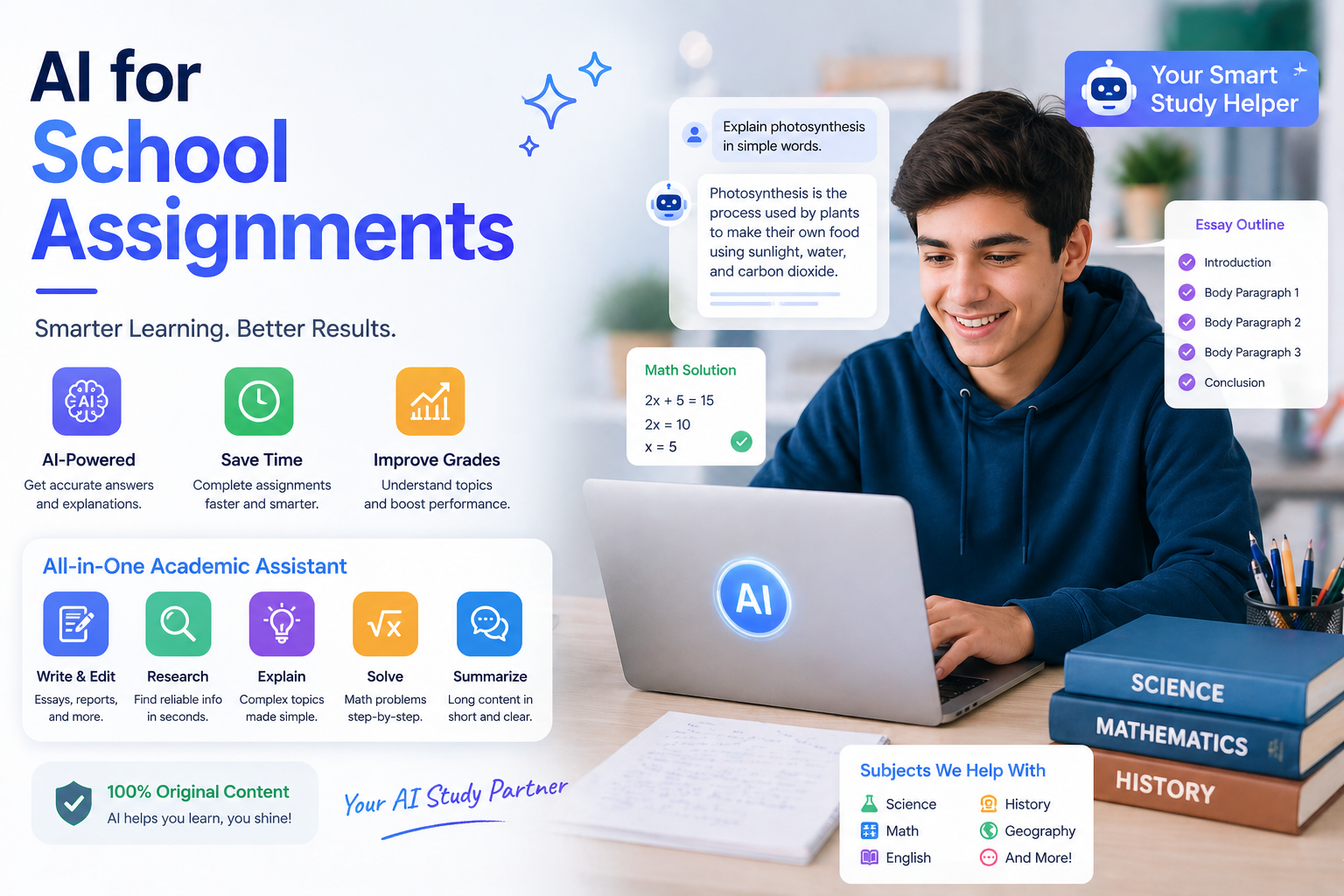
How are you? In today’s educational landscape, the integration of AI in School Assignments has become increasingly prevalent. As students, you might find yourselves utilizing innovative tools to enhance your learning experience. AI can assist you in various ways, from providing personalized feedback to generating creative ideas for your assignments. Embracing these technologies can significantly impact your academic journey.
Contents:
- Understanding AI in Education
- Benefits of AI for School Assignments
- Challenges of Implementing AI Tools
- Best AI Tools for Students
- How to Use AI Effectively
- Future of AI in Education
- Conclusion on AI for School Assignments
Feel free to continue reading as we delve deeper into the fascinating world of AI and its transformative effects on School Assignments. This journey will not only help you understand how to utilize AI effectively but also provide insights into the future possibilities it holds for education. Let’s explore these exciting developments together!
Understanding AI in Education: AI for School Assignments
Artificial Intelligence (AI) is becoming increasingly prevalent in education, particularly in assisting students with their school assignments. By employing advanced algorithms and data analysis, AI tools can provide personalized learning experiences, helping students grasp complex concepts more effectively. These technologies not only streamline the learning process but also enhance students’ engagement and motivation, allowing them to cultivate a deeper understanding of the subject matter. As educators embrace these innovations, it is essential to examine the potential implications and challenges that come with integrating AI into academic settings.
- What are the benefits of using AI for school assignments?
- Are there any risks associated with using AI in education?
- How can teachers effectively integrate AI into their curriculum?
- What skills do students need to work effectively with AI tools?
- Will AI replace traditional teaching methods?
Benefits of AI for School Assignments
Artificial Intelligence (AI) is revolutionizing the educational landscape, particularly in the realm of school assignments. By leveraging advanced algorithms and machine learning techniques, AI tools can assist students in various aspects of their academic work. This technology not only enhances the learning experience but also promotes efficiency and creativity in completing assignments.
- How does AI help with research for assignments?
- Can AI assist in writing essays?
- Is AI capable of providing personalized learning experiences?
- What role does AI play in time management?
- Are there any ethical concerns with using AI in school assignments?
Challenges of Implementing AI Tools
As schools increasingly turn to artificial intelligence (AI) to enhance learning and streamline administrative processes, several challenges arise. The integration of AI tools in educational environments is not merely a technological shift but also a cultural one. One major challenge is accessibility. Not all students have equal access to technology, which can create disparities in learning opportunities.
Technological Inequality
The issue of technological inequality is significant, as it leads to uneven educational experiences for students. Schools in affluent areas may have advanced AI tools while those in low-income regions struggle with outdated resources. This divide complicates the equitable implementation of AI systems in education.
Training and Support
Another challenge is the necessity of training teachers to use AI tools effectively. Without proper training, educators may find it difficult to integrate AI into their teaching methods, leading to underutilization of potentially transformative resources.
Data Privacy Concerns
Data privacy is also a crucial issue, as AI systems often require personal information from students. Schools must navigate complex regulations to ensure that student data is protected while still making effective use of AI technologies.
Long-term Implementation Strategies
Lastly, developing sustainable long-term strategies for AI implementation is essential. Schools need to create frameworks that allow for continuous evaluation and adaptation of AI tools to meet evolving educational needs.
Comparative Table of AI Implementation Challenges
| Challenge | Description | Implication |
|---|---|---|
| Technological Inequality | Disparity in access to AI tools | Potentially widening achievement gaps |
| Training and Support | Lack of proper teacher training | Underutilization of AI resources |
| Data Privacy | Con |
Best AI Tools for Students

In the digital age, AI tools have revolutionized the way students approach their school assignments. These tools are designed to assist in various aspects of learning, from research to writing and even problem-solving. With advanced algorithms and machine learning capabilities, AI can provide personalized learning experiences that cater to individual needs, thus improving overall academic performance.
Some of the best AI tools available for students include writing assistants, citation generators, and tutoring apps. These resources not only help students to complete tasks more efficiently but also enhance their understanding of the subject matter. As educational institutions increasingly integrate technology into the classroom, embracing these tools will become essential for students striving to excel in their studies.”AI tools are reshaping the educational landscape, providing students with resources that were once unimaginable.”
How to Use AI Effectively
Artificial Intelligence (AI) has transformed the way students approach their school assignments. By leveraging AI tools, students can enhance their productivity and improve the quality of their work. However, using AI effectively requires understanding its capabilities and limitations.
Understanding AI Tools
There are various AI tools available that can assist with research, writing, and even problem-solving. Tools like language models can generate text based on prompts, while data analysis tools can provide insights from data sets. It’s essential to choose the right tool that aligns with the assignment requirements.
Benefits of AI in Education
One of the most significant advantages of using AI is the speed at which information can be processed. Tasks that typically take hours can often be completed in just minutes with AI assistance. Additionally, AI can help identify gaps in knowledge and suggest resources for improvement.
Limitations of AI
Despite its benefits, AI has limitations. It might not always understand the context or nuance of a question, leading to inaccurate or irrelevant information. Students should be cautious and always verify AI-generated content before finalizing their assignments.
Best Practices for Using AI
To use AI effectively, students should adopt several best practices. First, they should clearly define what they need help with. Next, they should use AI outputs as a starting point rather than a final product. This approach encourages critical thinking and ensures that students engage with their material more deeply.
Conclusion
In summary, AI can be a powerful ally in academic settings when used responsibly. By understanding its strengths and weaknesses, students can utilize AI tools to enhance their learning experience and produce high-quality assignments.
| AI Tool | Description | Best Use Case |
|---|---|---|
| Language Model | Generates text based on a prompt | Creative writing and brainstorming |
| Dat |
Future of AI in Education

The integration of artificial intelligence in education is rapidly evolving, promising to revolutionize the way students learn and teachers instruct. AI tools such as intelligent tutoring systems can provide personalized learning experiences, adapting to each student’s unique strengths and weaknesses. This technology not only enhances the learning process but also allows educators to focus more on teaching by automating administrative tasks.
- Personalized learning experiences tailored to individual students.
- Automated grading and feedback systems for efficiency.
- Access to vast resources and information.
- Enhanced collaboration between students and AI systems.
- Real-time data analytics to track student progress.
- Improved engagement through interactive AI tools.
- Support for diverse learning styles and needs.
- Opportunities for remote learning and access to education.
Conclusion on AI for School Assignments
In conclusion, the integration of Artificial Intelligence in school assignments represents a significant shift in educational practices. AI tools have the potential to enhance learning experiences by providing personalized support, streamlining research processes, and assisting with time management. However, it is essential to use these technologies ethically to ensure that students develop critical thinking and problem-solving skills.
As educators and students navigate this evolving landscape, it is crucial to find a balance between leveraging AI and maintaining the integrity of the educational process. Embracing AI can lead to innovative teaching methods and improved academic performance, but it must be approached thoughtfully and responsibly.“The future of education is intertwined with the advancement of technology, making it imperative for us to adapt and innovate.”
Ultimately, AI can serve as a powerful ally in educational settings, enriching the learning experience if used judiciously. We must prioritize fostering a culture of curiosity and creativity in our classrooms while embracing the opportunities that AI brings.
Thank you for reading, and we look forward to seeing you again in other interesting articles.