
How to Create Automatic Articles with AI (Fast & Easy)

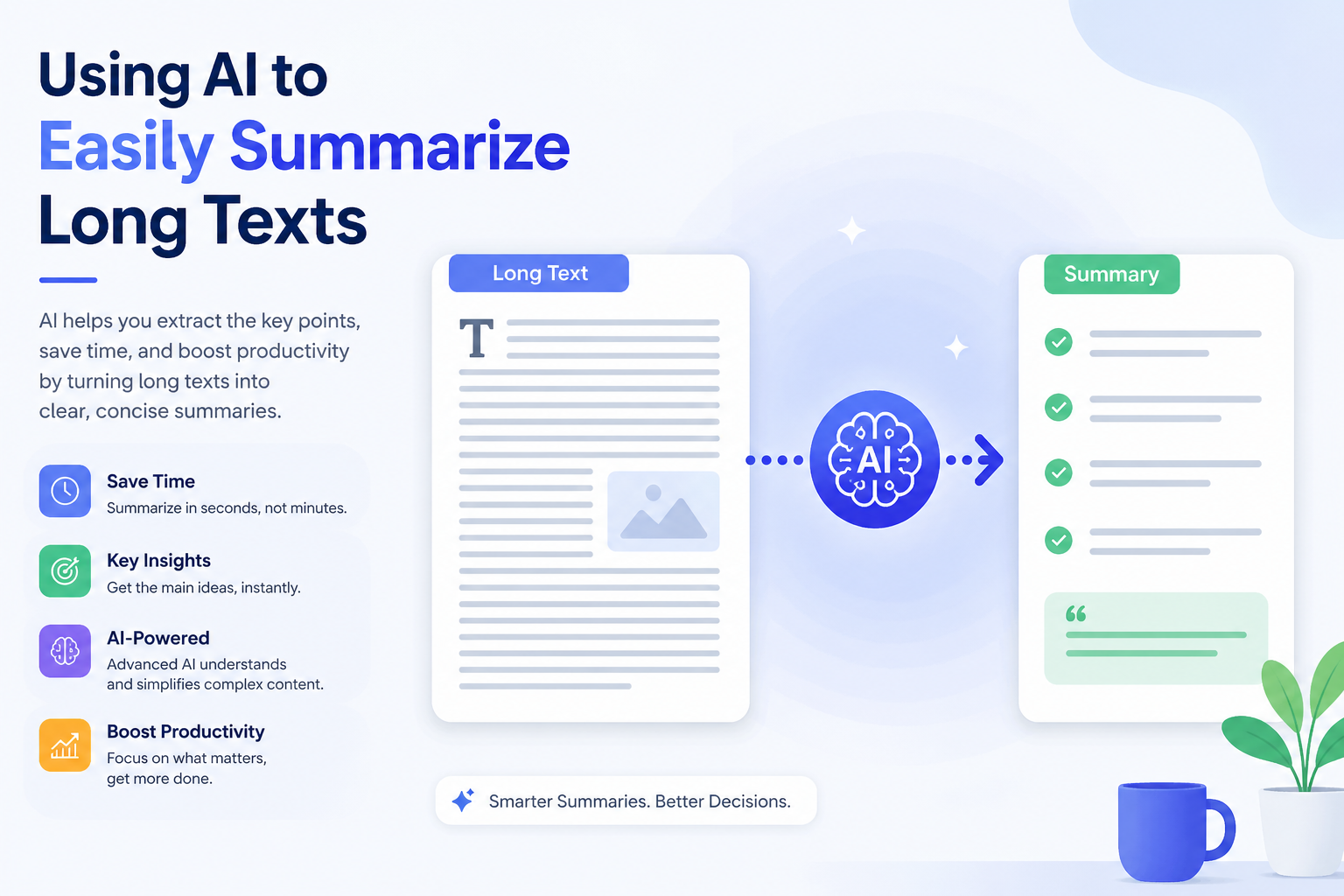
How are you? In today’s fast-paced world, we are constantly bombarded with information, making it challenging to keep up. This is where AI comes in. With the ability to easily summarize long texts, it streamlines the process of information consumption, helping you focus on what truly matters.
List of contents:
- Understanding AI Technologies
- Benefits of Summarizing Texts
- How AI Summarization Works
- Applications in Various Industries
- Challenges and Limitations
- Future Trends in AI Summarization
- Best Practices for Effective Summarization
- Conclusion and Further Reading
If you’re intrigued by how AI can easily summarize long texts, feel free to read on! Delving into the details can provide you with valuable insights into the mechanisms and applications of this remarkable technology. Understanding how to utilize AI effectively will not only enhance your productivity but also enrich your daily life.
Understanding AI Technologies
Artificial Intelligence (AI) has significantly transformed the way we process information, particularly in summarizing long texts. AI technologies enable users to distill essential points from extensive documents quickly and efficiently. In this digital age, eliminating tedious reading while retaining information quality is critical.
Key Concepts of AI in Text Summarization
Understanding the fundamentals of AI can enhance our grasp of its applications in text summarization. Key concepts include:
- Natural Language Processing (NLP)
- Machine Learning (ML)
- Deep Learning
- Text Classification
- Data Preprocessing
- Content Extraction
- Algorithm Design
Benefits of Using AI for Summarization
The implementation of AI technologies in summarizing texts presents numerous advantages:
- Time Efficiency
- Enhanced Accuracy
- Scalability
- Accessibility
- Improved Information Retention
- Customization
- Support for Multiple Languages
Benefits of Summarizing Texts
In today’s fast-paced information age, the ability to quickly summarize long texts is invaluable. With the advent of AI technologies, we can now efficiently condense extensive information into digestible summaries, making it easier for readers to grasp key points without the burden of sifting through pages of text. This not only saves time but also enhances comprehension and retention of important ideas.
- Improves time management by reducing reading time.
- Enhances focus on essential information.
- Facilitates quick decision-making in professional contexts.
- Aids in better understanding of complex subjects.
- Allows for easier sharing of vital information with others.
- Increases productivity in learning environments.
- Promotes accessibility for individuals with reading difficulties.
How AI Summarization Works
AI summarization is a powerful technique that leverages algorithms and machine learning models to automatically condense long texts into shorter, more digestible formats. By using natural language processing (NLP), AI systems can understand the context within the text and extract key information effectively. This technology is particularly useful for professionals who need to sift through vast amounts of data, allowing them to focus on the most relevant parts of the content.
Different Approaches to AI Summarization
There are mainly two approaches to AI summarization: extractive and abstractive. Extractive summarization involves selecting sentences from the original text to create a summary, while abstractive summarization generates new sentences that convey the same meaning as the original text. Each method has its advantages and can be chosen based on the specific requirements of the task at hand.
| Approach | Definition | Pros | Cons |
|---|---|---|---|
| Extractive | Selects existing sentences from the text | Preserves the original wording | May miss the overall context |
| Abstractive | Generates new sentences summarizing the text | Can provide better contextual understanding | Requires more advanced technology |
Applications in Various Industries
Artificial Intelligence (AI) has revolutionized the way industries process and manage information. One of its significant applications is in summarizing long texts, which is invaluable in our data-driven world. As organizations face an overwhelming amount of information, AI enables them to extract key insights quickly and efficiently.
Healthcare
In the healthcare sector, AI is utilized to analyze vast amounts of medical literature. By summarizing research papers and clinical studies, professionals can stay informed about the latest findings without spending hours reading. This not only improves patient care but also enhances research speed, leading to faster advancements in treatment.
Finance
Financial analysts rely on AI tools to summarize lengthy reports and market analyses. By quickly identifying trends and important data points, AI helps investors make timely decisions. This application of summarization reduces the risk of missing crucial financial information that could impact investment strategies.
Legal Services
In legal services, AI assists lawyers in reviewing extensive case files and legal documents. By summarizing these texts, it saves valuable time that can be redirected towards strategy development and client consultations. This application significantly increases efficiency in the legal profession.
Education
Educational institutions employ AI-driven tools to help students digest complex materials. By summarizing textbooks and scholarly articles, learners can grasp essential concepts without feeling overwhelmed by the volume of reading material.
Comparison of AI Summarization Tools
<
| Tool Name | Key Features | User Base |
|---|---|---|
| SummarizeBot | Multi-language support, customizable summaries | Businesses, Educators |
| SMMRY | User-friendly interface, web-based | Students, Researchers |
| Resoomer | Text analysis, automatic summarization | Writers, Academics |
Challenges and Limitations
While leveraging artificial intelligence to summarize lengthy texts offers numerous advantages, there are notable challenges and limitations to consider. One significant challenge is the potential loss of important context and nuances, which can lead to misunderstandings of the original material. Additionally, AI models may struggle with highly technical or specialized language, making it difficult for them to accurately summarize texts in certain fields.
Key Limitations
- Context Loss: AI may overlook critical details, affecting comprehension.
- Technical Language: Challenges in understanding complex terminologies.
- Bias in Training Data: Summaries can reflect biases present in the data.
- Lack of Emotional Insight: AI may fail to capture the emotional undertones of the text.
The effectiveness of AI tools can vary significantly based on the dataset used for training. Consequently, it is crucial to remain aware of these limitations and adopt a critical approach when utilizing AI for summarization tasks.
Future Trends in AI Summarization
As we look ahead, the future of AI summarization is poised to revolutionize the way we consume information. With advancements in natural language processing and machine learning, AI systems are becoming increasingly sophisticated at understanding the context and nuance of human language. This means that future tools may not only provide concise summaries but also tailor them to individual user preferences, ensuring that the most relevant information is highlighted. Moreover, as accessibility continues to be a focus, we can expect AI summarization tools to become more universally available, enabling a broader audience to benefit from this technology.
In addition to improving user experience, another exciting trend is the integration of AI summarization with other technologies. For example, combining summarization with sentiment analysis can help users gauge the tone of lengthy documents quickly. Furthermore, industries like education and journalism will likely adopt these tools to streamline workflow and enhance productivity. Overall, the potential for AI in summarization is vast, and as these technologies evolve, they will redefine how we approach long texts.
| Aspect | Current AI Summarization | Future AI Summarization |
|---|---|---|
| Context Understanding | Basic comprehension of key points | Advanced contextual analysis with user preferences |
| Customization | Standardized summaries | Personalized summaries based on user data |
| Integration | Standalone solutions | Combined with other technologies like sentiment analysis |
Best Practices for Effective Summarization
In the age of information overload, utilizing AI to summarize lengthy texts can be a game changer. To achieve the best results, one must apply certain best practices that enhance the summarization process. Firstly, it is essential to select the right AI tool that aligns with the type of content you are working with, whether it is technical documents, articles, or books.
Moreover, understanding the context of the text is crucial. AI systems analyze patterns and prioritize key phrases, but providing clear guidelines can dramatically improve their accuracy. When summarizing, it is helpful to create an outline beforehand. This outline serves as a roadmap, ensuring that important themes and concepts are accurately represented in the summary.
Lastly, post-summarization editing is invaluable. AI-generated summaries often require human oversight to capture nuances and critical insights that machines might overlook. Reviewing and refining the summary not only polishes the content but also enhances its relevance and readability, making it more accessible to the intended audience.
Conclusion and Further Reading
In conclusion, utilizing AI to summarize long texts can significantly enhance our ability to process information efficiently. The advancements in natural language processing and machine learning have made it possible for AI to understand and distill complex content into concise summaries. This not only saves time but also helps in retaining the essential points from lengthy documents.
As we continue to integrate AI technologies into our daily tasks, the potential for improved productivity and comprehension becomes evident. Whether in academic research, business reports, or casual reading, AI-powered summarization tools can serve as valuable allies in managing the overwhelming amount of information available today.By embracing AI tools, we can transform the way we interact with texts and enhance our overall understanding of varied subjects.
For those interested in exploring this topic further, I encourage you to delve into articles that cover the latest advancements and applications of AI in text summarization. Understanding these tools can provide you with the knowledge needed to leverage them effectively.