
Restarting Your Device Safely

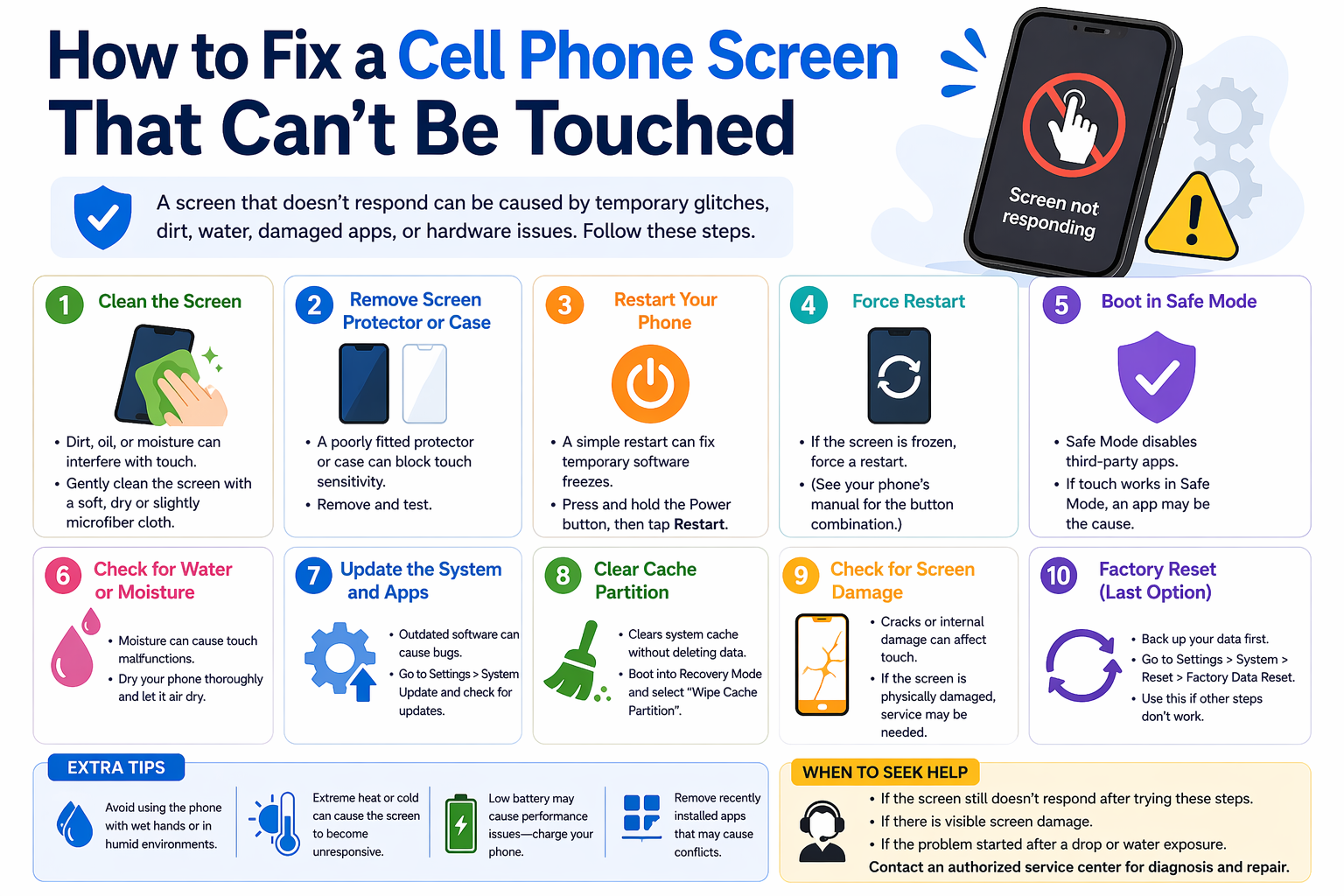
How are you? In today’s digital world, a cell phone is an essential device for many of you. However, sometimes issues may arise, such as a screen that is unresponsive to touch. This article will walk you through various solutions to fix a cell phone screen that can’t be touched, ensuring that you can maintain the functionality of your device. With the right steps, you can avoid costly repairs and enjoy your phone once again.
List of contents:
- Understanding the Problem with Touchscreens
- Restarting Your Device Safely
- Cleaning Your Screen and Ensuring No Obstructions
- Updating Your Device’s Software
- Calibrating Your Touchscreen Settings
- Using Safe Mode to Diagnose Software Issues
- Checking for Hardware Malfunctions
- When to Seek Professional Help
If you find your device’s touchscreen isn’t responding, continue reading to explore these solutions in detail. Knowing how to effectively troubleshoot can not only save you time but also prevent unnecessary expenses. Remember, maintaining the performance of your phone is key, so keep reading to ensure you’re equipped with the knowledge to handle such issues effectively!
Understanding the Problem with Touchscreens
Touchscreens are an integral part of modern smartphones, allowing for seamless interaction through taps and swipes. However, there can be instances when a touchscreen becomes unresponsive, which can be frustrating for users. This issue may arise from several factors, including software glitches, hardware malfunctions, or even environmental conditions.
Common Causes of Touchscreen Issues
One common cause of touchscreen failure is software-related problems, such as a recent update, which may trigger unexpected behavior. Hardware issues can also lead to the screen becoming unresponsive, especially if the device has suffered physical damage.
Environmental Factors
Moreover, environmental factors like moisture, dirt, or oil on the screen can cause touch sensitivity problems. Keeping the screen clean and dry is essential to ensure optimal functionality.
Identifying the Problem
To identify whether the issue lies with the software or hardware, users should conduct a series of tests. Restarting the device or performing a factory reset can help determine if a software issue is at fault. If these steps do not restore functionality, then hardware problems may need to be addressed.
Table of Common Touchscreen Problems and Understanding
| Problem | Possible Cause | Solution |
|---|---|---|
| Unresponsive Screen | Software Glitch | Restart Device |
| Slow Response | Dirty or Wet Screen | Clean Screen |
| Partial Touch Response | Hardware Damage | Consult Repair Professional |
Understanding these problems and their solutions can help users troubleshoot touchscreen issues effectively, restoring their devices to full functionality.
Restarting Your Device Safely
When your cell phone screen becomes unresponsive, a safe restart may be the easiest solution to try first. It’s essential to ensure that your phone does not have any ongoing processes that could lead to data loss. Below, we will discuss how to restart your device properly.
Understanding the Importance of Restarting
Restarting your phone can refresh the system and resolve minor glitches. This simple action can often restore functionality to a screen that has stopped responding. It’s a proactive step in troubleshooting.
How to Restart iOS Devices
For iPhones, press and hold the side button and the volume up or down button simultaneously until the slider appears. Then slide to power off your device. After a few seconds, press and hold the side button again until the Apple logo appears.
How to Restart Android Devices
For most Android devices, press and hold the power button until the power menu appears. Then select “Power off” and wait for the device to turn off. Once off, press and hold the power button again until the logo appears.
Comparing Restart Methods
| Device Type | Restart Method |
|---|---|
| iOS | Hold side + volume button, slide to power off |
| Android | Hold power button, select “Power off” |
After restarting, check if your screen responds correctly. If the problem persists, additional steps may be necessary.
Cleaning Your Screen and Ensuring No Obstructions

Keeping your cell phone screen clean is essential for maintaining its touch functionality. Dirt, fingerprints, and grime can accumulate over time, leading to a less responsive touchscreen. Start by using a microfiber cloth to gently wipe the screen in circular motions. If stubborn smudges remain, slightly dampen the cloth with water or a gentle screen cleaning solution. Avoid using harsh chemicals as they can damage the screen coating. It’s important to ensure no obstructions are present, as even a small piece of debris can affect your screen’s performance.
Additionally, inspect the edges of your phone where dust and lint can gather. In some cases, removing the phone case or screen protector may reveal hidden dirt that necessitates cleaning. After thoroughly wiping the screen, test its responsiveness by tapping or swiping. If you still encounter issues, there may be underlying problems beyond mere surface dirt. Keeping the screen clear of obstructions is vital for optimal use.
Updating Your Device’s Software
When facing issues with a cell phone screen that is unresponsive to touch, one of the first steps you should consider is updating your device’s software. Outdated software can cause various problems, including screen malfunction. Regular updates often contain fixes for known issues that may affect your device’s performance.
Reasons to Update Software
Updating your phone software can enhance the user experience significantly. Here are some reasons why:
- Bug Fixes: Software updates frequently include fixes for bugs that could be causing issues with screen responsiveness.
- New Features: Updates may introduce new features that could improve functionality and usability.
- Security Enhancements: Keeping your software up to date helps protect your device from vulnerabilities.
How to Check for Updates
To ensure your phone is running the latest software version, check for updates regularly. Here’s how to do it:
- Open the Settings app on your phone.
- Scroll down to About Phone or System.
- Look for Software Update or System Update.
- Follow the prompts to download and install any available updates.
Common Problems Resolved by Updates
Updating your device software can resolve several common issues, including:
| Issue | Resolution |
|---|---|
| Unresponsive Screen | Software bugs fixed in the update. |
| Battery Drain | Optimizations that improve battery life. |
| App Crashes | Compatibility enhancements with apps. |
Final Tips
Remember
Calibrating Your Touchscreen Settings
When your cell phone screen becomes unresponsive, one of the first steps you can take is to calibrate your touchscreen settings. This process adjusts the sensitivity of the screen to better recognize touch input.
Understanding Touchscreen Calibration
Calibration involves aligning the touch inputs with the screen’s display. This can help resolve issues where input is not accurately sensed. Regular calibration may improve your overall user experience.
Steps to Calibrate Your Touchscreen
To initiate the calibration process, follow these simple steps:
- Access the settings menu on your device.
- Look for options related to display or touchscreen settings.
- Locate the calibration feature and follow the on-screen instructions.
Common Calibration Issues
Sometimes, users may face challenges during the calibration process. Inconsistent touch recognition or failure to complete calibration can occur due to software glitches.
Comparison of Calibration Methods
| Method | Pros | Cons |
|---|---|---|
| Manual Calibration | User-controlled, accurate | May require technical knowledge |
| Automatic Calibration | Easy and fast | Less control over the process |
Proper calibration can restore functionality to a non-responsive touchscreen, making it an essential step in troubleshooting cell phone screen issues. By regularly checking and calibrating your device, you can ensure that it operates smoothly and responds appropriately to your touch.
Using Safe Mode to Diagnose Software Issues

If your cell phone screen becomes unresponsive, one effective way to diagnose potential software issues is by using Safe Mode. Safe Mode allows the device to run with minimal software, disabling third-party applications that could be causing the touchscreen to malfunction. To enter Safe Mode, turn off your phone, then turn it back on while pressing the correct button combination for your specific device. Once in Safe Mode, test if the screen responds correctly. If the issue is resolved in this mode, a recently installed app might be the cause of the problem.
- Safe Mode helps to determine if the problem is software-related.
- It restricts the phone’s functionality to default applications.
- Testing the screen in Safe Mode can quickly isolate the cause.
- If the screen works in Safe Mode, consider uninstalling recent apps.
- Make sure to update all applications before diagnosing further.
- Understanding which apps are running can help avoid conflicts.
- Safe Mode is an essential troubleshooting step.
Checking for Hardware Malfunctions
If your cell phone screen is unresponsive to touch, the first step is to check for hardware malfunctions. This could involve examining the device for any physical damage, such as cracks or water exposure. Pay close attention to signs of wear and tear, as these can significantly affect screen performance.
Next, ensure that there are no obstructions between your fingers and the screen. Sometimes, dirt or a screen protector that is improperly applied can hinder touch functionality. Cleaning the screen gently with a microfiber cloth can often resolve these issues.
If the problem persists, consider performing a hard reset on your device. This can sometimes recalibrate the touchscreen, restoring its responsiveness. If all else fails, it may be necessary to consult a professional for further diagnosis or repair.
When to Seek Professional Help
If you have tried all the suggested methods to fix a cell phone screen that cannot be touched and the issue persists, it may be time to consult a professional technician. Sometimes, the problem may be due to a hardware failure that requires specialized tools and expertise to diagnose and repair.
It’s especially crucial to seek help if your phone has suffered physical damage or water exposure. Ignoring such issues can lead to further complications and more expensive repairs down the line. A trained technician can provide a thorough assessment and offer solutions that might not be apparent to a layperson.
Furthermore, attempting to fix intricate issues yourself can void your warranty, so it’s worth weighing the potential risks. Remember, while DIY repairs can be fun and educational, they don’t always yield the intended results. In some cases, paying for professional help saves you both time and money.“Knowing when to seek help is just as crucial as trying to fix the problem yourself.”
In conclusion, diagnosing a non-responsive cell phone screen can be complex, and while there are many DIY solutions available, not every issue can be resolved with simple fixes. If you’re ever in doubt, it’s best to seek help from a qualified professional who can ensure your device is properly repaired.
Thank you for taking the time to read this article. Until we meet again in another interesting article, “Thank you.”