Signal Loss Suddenly
In today’s article, we’ll discuss what to do when you suddenly lose signal. This is a frustrating experience that can disrupt your daily activities, impacting communication and connectivity. We want to help you effectively address this issue, so keep reading as we’ll cover some helpful strategies. Remember, resolving signal loss requires understanding the root cause and taking actionable steps to improve your situation. Let’s explore some practical solutions together!
Contents:
- Common Causes of Signal Loss
- Testing Your Connection
- How to Reset Your Device
- Optimizing Your Location for Better Signal
- Using Signal Boosters
- When to Seek Professional Help
- Preventive Measures Against Signal Loss
Feel free to continue reading as we explore these aspects further. Understanding how to manage and overcome the challenges of signal loss can significantly improve your overall experience with communication devices. Don’t let signal loss hold you back, and empower yourself with the necessary knowledge to solve these issues effectively. Your connectivity matters, so let’s dive deeper into each of the listed content topics!
Common Causes of Signal Loss
Signal loss can be a frustrating experience, especially when you rely on a stable connection for work or leisure activities. Several factors contribute to the sudden loss of signal, including environmental conditions, equipment malfunctions, and network congestion. For instance, heavy rain or snow accumulation can interfere with signal transmission, particularly in wireless networks. Additionally, outdated equipment may struggle to maintain a connection when faced with newer technology standards.
Moreover, interference from other electronic devices can disrupt signals, causing unexpected drops. Common household items like microwaves or cordless phones emit frequencies that may conflict with your signal. In some cases, a simple reboot of your router or repositioning it can solve the problem. Understanding these issues is essential to finding effective solutions to maintain a reliable connection.“Knowing the common causes of signal loss can help in troubleshooting and preventing future occurrences.”
Testing Your Connection
Before resolving issues related to signal loss, it’s essential to first test your connection. This will help you identify the root cause of the problem. Many users encounter sudden signal loss due to various factors. Knowing how to diagnose the issue can save you time and frustration.
Checking Device Settings
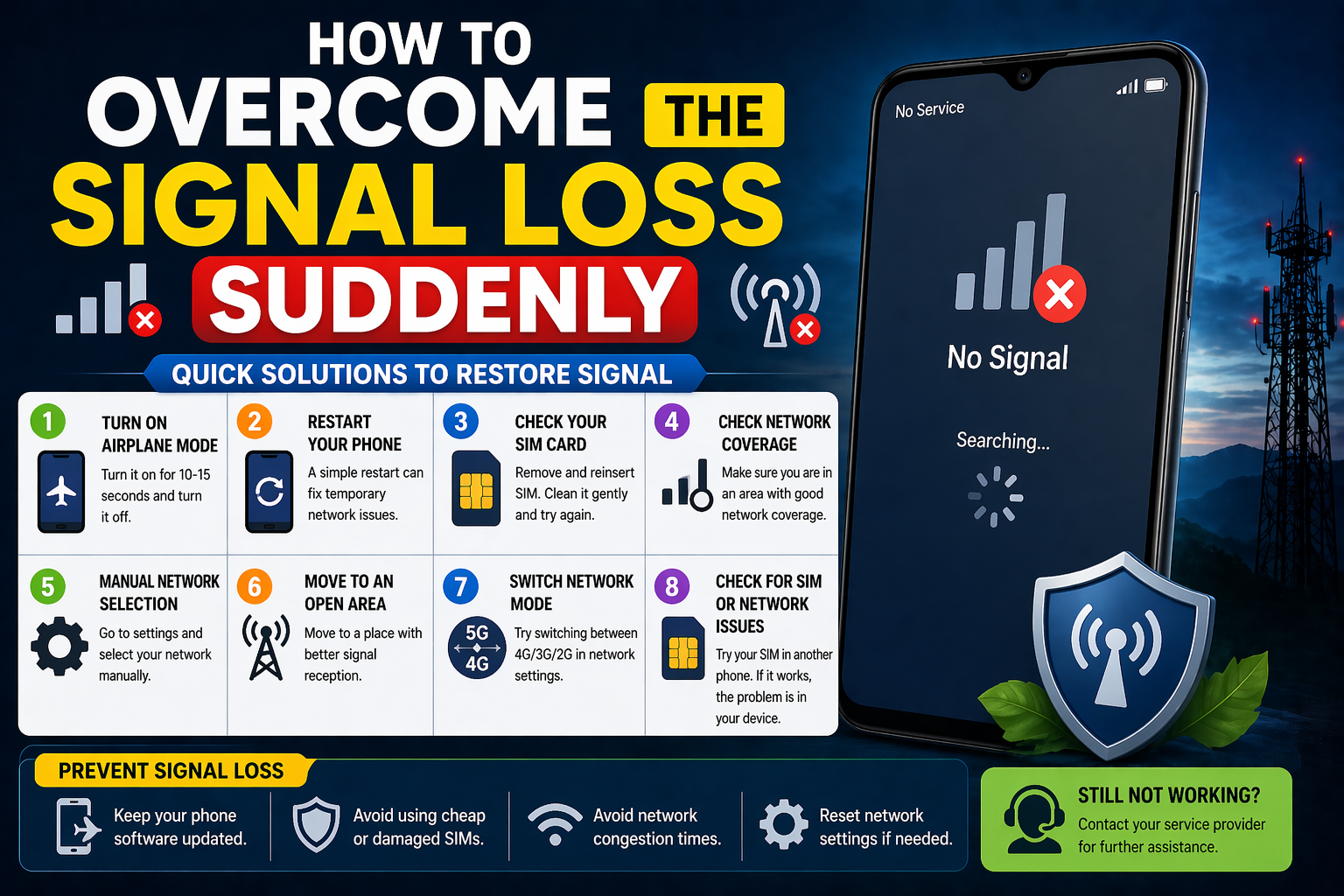
Start by reviewing the settings on your device. Ensure that the Wi-Fi or mobile data option is enabled. Additionally, verify that your device is not in Airplane mode, which can disable connectivity.
Restarting the Device
A simple yet effective method for troubleshooting is to restart your device. This often resolves temporary glitches that may cause signal loss.
Inspecting the Network Hardware
If your connection remains unstable, examine your network hardware. Check that your router is powered on and operating correctly. Occasionally, simply rebooting the router can solve connectivity problems.
Running a Speed Test
Conducting a speed test is a good way to assess your connection quality. There are several free tools available online that can help measure your upload and download speeds. Understanding these metrics can highlight potential issues with your service provider.
| Understanding Signal Loss | Possible Causes | Solutions |
|---|---|---|
| Weak Signal Strength | Distance from router | Move closer to the router |
| Interference | Obstacles or other electronic devices | Remove barriers and relocate router |
| Service Outage | Provider issues | Contact your service provider |
How to Reset Your Device
Sometimes, signal loss can be a frustrating experience, particularly when you need to stay connected. One effective solution is to reset your device, which can help restore the connection and resolve temporary issues. Properly resetting your device can ensure that all settings revert to their default state, potentially clearing any bugs that may have caused the signal loss in the first place. Here’s how to go about it:
- Turn off your device completely.
- Remove the battery if possible or unplug it from the power source.
- Wait for about 30 seconds to a minute.
- Reinsert the battery or plug it back in.
- Power the device back on.
- Check your settings to ensure that your network is properly configured.
- Try connecting to the signal again to see if the problem is resolved.
By following these steps, you may be able to effectively troubleshoot and resolve connection issues, restoring your access to important services and information.
Optimizing Your Location for Better Signal
In today’s fast-paced world, losing signal unexpectedly can be frustrating. To overcome signal loss efficiently, one of the first steps is to optimize your location. Choosing the right spot can greatly enhance your connectivity. For instance, positioning yourself near windows or in higher areas can improve reception significantly, as it reduces interference from surrounding obstacles.
Furthermore, you should also consider the surrounding environment. Areas with tall buildings, trees, or other large structures can obstruct signals. Being aware of such factors can help you find a more suitable location for better connectivity. Ideally, try to stay in open spaces where signals can travel freely.
Lastly, if you’re still experiencing issues, it might be beneficial to invest in signal boosters or repeaters. These devices can help amplify weak signals and provide a more reliable connection regardless of your location. By implementing these strategies, you can minimize disruptions and maintain better communication.
Using Signal Boosters
Signal loss can be a frustrating experience, especially when you rely on your mobile device for communication. One effective solution to this problem is the use of signal boosters. These devices amplify the existing cellular signal, allowing for improved reception in areas where the signal strength is weak. Whether you live in a remote location or experience signal loss within your home or office, signal boosters can significantly enhance your connectivity.
How Signal Boosters Work
Signal boosters capture the weak cellular signal from outside and amplify it. They consist of three main components: an external antenna, an amplifier, and an internal antenna. The external antenna collects the weak signal, the amplifier boosts the signal strength, and the internal antenna broadcasts the amplified signal inside the building. This setup ensures that users can enjoy better call quality and faster data speeds.
Benefits of Signal Boosters
There are several benefits of using signal boosters:
- Improved Signal Strength: Users experience fewer dropped calls and better call clarity.
- Reliable Connectivity: Boosters provide a stable connection for browsing and streaming.
- Wide Coverage: They can cover areas that are prone to signal loss, such as basements or remote locations.
- Cost-Effective: Investing in a signal booster is often cheaper than switching mobile carriers.
When to Seek Professional Help
Experiencing sudden signal loss can be frustrating, especially when it disrupts your daily activities. While there are several troubleshooting steps you can take on your own, it is crucial to know when to seek professional help. If basic solutions such as resetting your device or checking your network settings do not resolve the issue, it may be time to consult an expert.
Moreover, if you notice persistent or recurring problems with signal loss, addressing the issue early can prevent further complications. Professionals have the necessary tools and expertise to diagnose underlying technical problems that you may not be able to see. They can ensure that any hardware or software issues are properly managed.
Lastly, if you find that the signal loss affects your work or personal life significantly, do not hesitate to reach out for help. Getting professional support will enhance your chances of finding a long-term solution and minimizing disruptions. Remember, it’s better to seek help than to continue struggling with the problem.
Preventive Measures Against Signal Loss
In conclusion, facing sudden signal loss can be frustrating, especially in critical moments. However, by implementing preventive measures, you can significantly reduce the chances of experiencing this issue. Regular maintenance of your devices, ensuring proper placement of antennas, and minimizing physical obstructions are crucial steps in maintaining a stable connection.
Moreover, investing in better quality equipment and using signal boosters can also enhance your ability to maintain a reliable signal. Always be aware of your surroundings and the potential factors that may cause interference, such as neighboring networks or electronic devices.“By understanding the dynamics of signal transmission and proactively taking preventive measures, we can ensure connectivity remains uninterrupted.”
Ultimately, being proactive is the key to overcoming the challenges of sudden signal loss. By following these preventive measures, you not only enhance your current setup but also pave the way for a more reliable communication experience.
Thank you for reading, and we look forward to seeing you in another interesting article!