
Connection on Android Phone

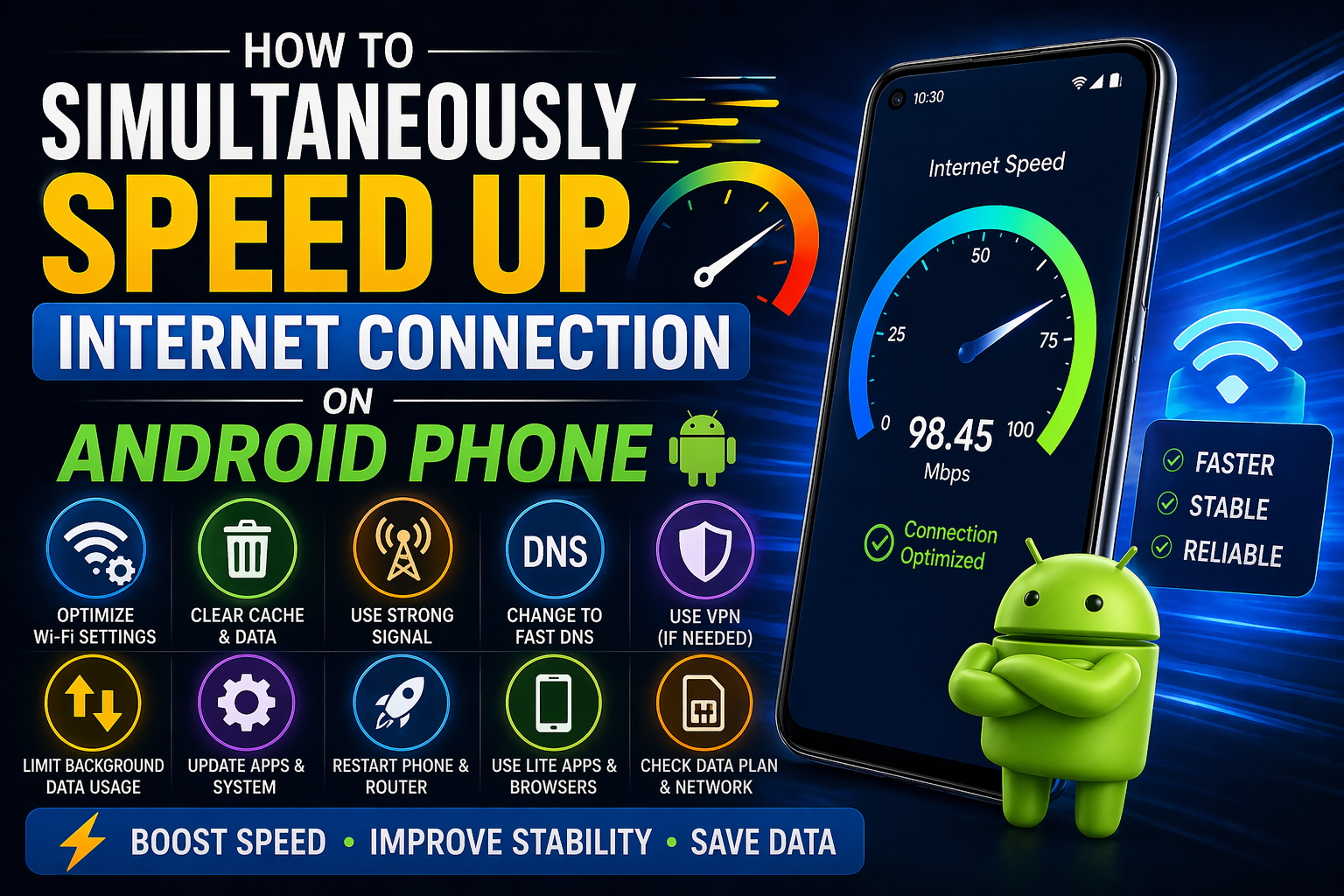
How are you? In this article, we will explore ways to simultaneously speed up your internet connection on your Android phone. By following these tips, you can enjoy a faster browsing experience and improve your online activities significantly. Let’s dive into the details and help you enhance your internet performance!
List of contents:
- 1. Optimize Network Settings for Android
- 2. Use a VPN for Improved Speed
- 3. Clear Cache and Data Regularly
- 4. Switch to 5GHz Wi-Fi Band
- 5. Limit Background Data Usage
- 6. Update Your Android Device
- 7. Use Internet Speed Test Apps
Please continue reading to discover detailed tips and tricks that will help you speed up your internet connection on your Android phone effectively. These strategies are easy to implement and can lead to significant improvements in your internet speed, allowing you to enjoy a seamless online experience. So let’s get started and enhance your connectivity today!
1. Optimize Network Settings for Android
To enhance your internet speed on an Android phone, the first step is to optimize your network settings. This can include disabling background data for apps that you don’t use often, limiting the number of applications running simultaneously, and ensuring that your device is connected to a strong Wi-Fi network. Additionally, you can try to clear the cache of your apps, which can help to improve performance and an overall smoother browsing experience.
- What are the best settings to improve my internet speed?
- Is it safe to use VPNs for better speed?
- Can changing DNS settings help my internet speed?
- How important is the Wi-Fi signal strength?
- Will a factory reset improve my internet speed?
2. Use a VPN for Improved Speed
To simultaneously speed up your internet connection on an Android phone, utilizing a VPN can be an effective solution. A VPN, or Virtual Private Network, not only enhances your privacy but can also improve your internet speed by optimizing the routes your data takes. By encrypting your connection and bypassing throttling from your internet service provider, a VPN facilitates a more seamless browsing experience.
- VPNs can reduce lag during online gaming.
- They often have faster servers specifically optimized for streaming.
- A VPN can help you find less congested connections.
- It protects against bandwidth throttling imposed by your ISP.
- VPNs can enable access to region-restricted content, improving choices.
- They provide a secure way to connect to public Wi-Fi without compromising speed.
- Many VPNs offer user-friendly apps that make setup easy on Android devices.
3. Clear Cache and Data Regularly
One effective way to enhance your Android phone’s internet speed is to clear the cache and data of frequently used applications. Over time, cached data can accumulate and slow down app performance, which may, in turn, impact your internet connection speed. By regularly clearing cache data, you not only optimize the performance of your apps but also ensure that they load the latest information rather than relying on outdated files.
Benefits of Clearing Cache
Clearing cache can lead to several advantages:
- Improved Performance: Apps run more smoothly without old data clogging up resources.
- Increased Storage Space: Cache files can consume significant space; clearing them frees up storage.
- Updated Content: You receive the latest version and content rather than older cached versions.
Comparison of Cache Clearing Options
| Method | Ease of Use | Effectiveness |
|---|---|---|
| Manual Clearing | Moderate | High |
| Automatic Clearing Apps | Easy | Moderate |
| System Settings | Easy | High |
4. Switch to 5GHz Wi-Fi Band
Switching to the 5GHz Wi-Fi band can significantly enhance your internet speed on an Android phone. This frequency offers faster speeds and reduced interference, making it an ideal choice for activities such as streaming, gaming, and browsing. Many modern routers support dual-band functionality, which means you can choose between 2.4GHz and 5GHz bands.
Understanding the Frequency Bands
The main difference between the 2.4GHz and 5GHz bands lies in their range and speed. The 2.4GHz band covers a larger area but is generally slower and more prone to interference from other devices.
Benefits of 5GHz Wi-Fi
Using the 5GHz band can lead to less congestion and better performance, especially in crowded areas. Faster speeds, lower latency, and improved performance are significant advantages for multitaskers.
Setting Up Your Router
To take advantage of the 5GHz band, ensure your router supports it. Access your router settings and enable the 5GHz option, then connect your Android device to this network.
Comparison of Wi-Fi Bands
| Band | Speed | Range | Interference |
|---|---|---|---|
| 2.4GHz | Up to 600 Mbps | Longer | Higher |
| 5GHz | Up to 1300 Mbps | Shorter | Lower |
By utilizing the 5GHz band, you can enjoy a more stable and faster internet experience on your Android phone, making it worthwhile to switch if your router supports this capability.
5. Limit Background Data Usage

To effectively speed up internet connection on your Android phone, it is crucial to limit background data usage. Background applications can consume a substantial amount of data, slowing down your internet experience. By restricting these applications, you can allocate more bandwidth to the apps you actively use.
- Identify apps that frequently use background data.
- Adjust settings to limit data access for these applications.
- Use data saver modes available in your Android settings.
- Turn off automatic updates for apps.
- Regularly check permissions for background data access.
- Consider uninstalling apps that are unnecessary.
- Monitor your data usage with built-in tools.
6. Update Your Android Device
Keeping your Android device updated is crucial for improving internet connectivity. System updates not only bring the latest features but also optimize the performance of your device. Regularly checking for updates ensures that you are utilizing the latest security patches and enhancements that can help in reducing network issues.
To update your device, go to your device settings and navigate to the ‘Software Update’ section. By installing these updates, you not only improve your device’s overall speed but also potentially boost your internet connection performance.
7. Use Internet Speed Test Apps
To ensure that your internet connection is performing at its best, using internet speed test apps can be incredibly helpful. These apps allow you to measure your download and upload speeds, providing you with insights into how well your connection is working. By analyzing the speed results, you can identify potential issues that may be slowing you down.
Moreover, many speed test applications offer additional features such as historical data tracking, which lets you see how your internet performance changes over time. Armed with this information, you can make informed decisions on whether you need to change your service provider or troubleshoot connectivity issues.
Utilizing these applications not only helps in diagnosing problems but can also give you a clearer picture of how various network settings and optimizations impact your internet speed. Regular testing can be an essential part of maintaining a smooth and efficient online experience.
In conclusion, by employing tools like internet speed test apps alongside other optimization methods, you can significantly enhance your internet connection on your Android device. This combination of strategies ensures a comprehensive approach to improving performance.“Reliable measurements give you the power to take control of your internet speed.”
As we wrap up this article, remember that consistent monitoring and adjustments can make a big difference in your online experience. Don’t hesitate to explore multiple options to achieve the best results. Until we meet again in another interesting article, thank you!